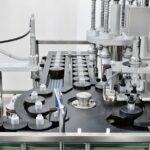

 How IDM Automation is redefining the cosmetic factory as an intelligent ecosystem—combining advanced automation, sustainability, and human-centric industrial design.

In a cosmetics industry increasingly driven by personalisation, sustainability, and fast time-to-market, automation is no
longer just a technical choice. It has become a strategic decision—one that shapes how a company produces, organises work, and positions itself in the market.
This is the perspective behind IDM Automation’s solutions. Rather than delivering stand-alone machines, the company designs industrial systems built to last, evolve alongside brands, and ensure continuity between technological innovation, production quality, and respect for people.
This vision is articulated by Daniele Tozza, Head of Sales, who recently joined the team and now represents an industrial approach that places intelligent automation, sustainability, and human value at the core of competitiveness.
IDM Automation has long worked alongside the cosmetics industry. What are the most significant changes you see in how brands design and industrialise their products today?
In recent years, the most evident shift has been the growing focus on consumer experience. Brands are no longer designing only eye-catching packaging, but also formulas and textures that require increasingly sophisticated production processes.
From makeup to skincare—innovative mascaras, sensorial foundations, refillable lipsticks, delicate creams, and multi-phase products—these developments demand filling and assembly lines that are extremely flexible. Precision dosing, delicate materials, and complex formats are now standard requirements.
Sustainability and speed-to-market have become priorities. Brands are looking for modular solutions that reduce waste and energy consumption. For IDM Automation, this means developing technologies that combine intelligent automation, advanced quality control, and adaptability, supporting brand creativity without compromise.
Automation is becoming increasingly “intelligent,” with artificial vision, advanced sensors, and collaborative robots. Which technologies are truly transformative for cosmetics?
Intelligent automation is reshaping the cosmetics industry. Machine vision is no longer just a quality-control tool; it has evolved into a real-time analysis system capable of inspecting both product and packaging, even when dealing with complex textures.
Advanced sensors and intelligent dosing systems play a key role in managing delicate formulas and variable viscosities, minimising waste while preserving product integrity. Collaborative robots are also transforming assembly processes thanks to their flexibility, enabling the automation of complex operations and the handling of multiple formats with greater safety, speed, and customisation.
A strong theme that emerges is attention to people. How central is this in IDM Automation’s approach?
It is fundamentally a matter of industrial culture. For IDM Automation, automation is not designed to replace people, but to free them from repetitive, low-value, and potentially alienating tasks—activities that, over time, negatively impact both production quality and working conditions.
The goal is to create production lines where people can grow professionally, develop skills, and take responsibility. Operating an automated line means managing a complex process, understanding its logic, and actively contributing to its optimisation—improving the entire production environment.
This is also a competitive differentiator. A well-organised, safe factory run by skilled personnel is immediately recognisable during audits and customer visits. It allows IDM Automation to work with companies that share the same vision of quality, reliability, and industrial responsibility.
Sustainability is now a priority for many brands. How do you integrate it into your systems in practical terms?
For IDM Automation, sustainability is an integral part of design. We work on multiple levels: reducing energy consumption, developing modular solutions, optimising processes, and minimiing waste.
Our lines are engineered for efficiency, using low-consumption motors and software designed to reduce downtime. Modular architectures help limit waste and allow production to adapt without replacing entire machines. Materials are also a key consideration: our systems are designed to handle recyclable packaging and innovative components without sacrificing speed or quality.
Intelligent automation and real-time control reduce scrap and ensure consistent quality. In this sense, sustainability also means long-term industrial efficiency and reliability.

You are known for managing complex formats and innovative packaging. Is there a recent project that represents this approach particularly well?
One particularly significant project involved the development of a lipstick production line using a newly designed machine capable of extremely precise mold temperature control.
The challenge was managing two critical phases: the hot pouring phase, essential for proper mass fluidity, and the cooling phase, necessary to achieve a perfectly compact and well-finished stick. We integrated advanced thermal regulation systems and intelligent sensors that monitor every variation in real time, significantly reducing defects and waste.
This project is a concrete example of how technological innovation and attention to detail can translate creative requirements into reliable, flexible industrial processes.
You work with very different markets worldwide. Where do you currently see the strongest push toward automation?
Drawing on its long-standing experience in industrial automation, IDM Automation observes clear differences across regions. In Italy and Europe, the focus is on quality and flexibility. In Asian markets, the emphasis is on speed, scalability, and digital integration, with strong attention to productivity, ergonomics, and operational continuity.
In the United States, automation adoption is more recent and often driven by labor-related challenges, alongside growing demand for customization, innovation, and modular solutions. Asia remains the fastest-moving region, with rapid adoption of intelligent automation supported by significant investment, pushing toward advanced technologies that can still adapt to diverse production cultures.
When you collaborate with a company—whether in Italy or abroad—what is your approach?
IDM Automation always starts by analysing the client’s real needs. The goal is not to sell a catalog machine, but to design an industrial investment built to last.
A production line must evolve with the company, adapting to new products, volumes, and markets. This is why initial design, staff training, and after-sales support are fundamental elements that directly impact both the operational and strategic success of the system.
How do you ensure operational continuity and support when working with international clients?
When working with international companies, IDM Automation’s approach is based on proximity and continuity. Being part of the ILPRA Group allows us to provide qualified technical assistance and rapid support through wholly owned subsidiaries and a network of carefully selected and internally trained partners.
This is complemented by digital tools for remote monitoring and predictive diagnostics. Design, training, and after-sales service become key pillars in building a strong, long-term industrial partnership.
Looking ahead, what elements will define the “cosmetic factory of the future”?
The cosmetic factory of the future will be an intelligent ecosystem where modularity and flexibility are the norm. Not just automated lines, but systems capable of adapting in real time to market demands—switching between products without stopping production.
Artificial intelligence will play a central role in predictive analysis, preventive maintenance, and continuous data-driven process optimisation. Sustainability will be embedded at every stage, with systems designed to reduce energy use, waste, and scrap, while enabling increasingly circular management of materials and packaging.
Finally, a key element will be the growing connection between factory and brand. Digital platforms will enable real-time monitoring, customisation, and—in some cases—co-creation of products, bringing manufacturing and brand strategy closer than ever before.