
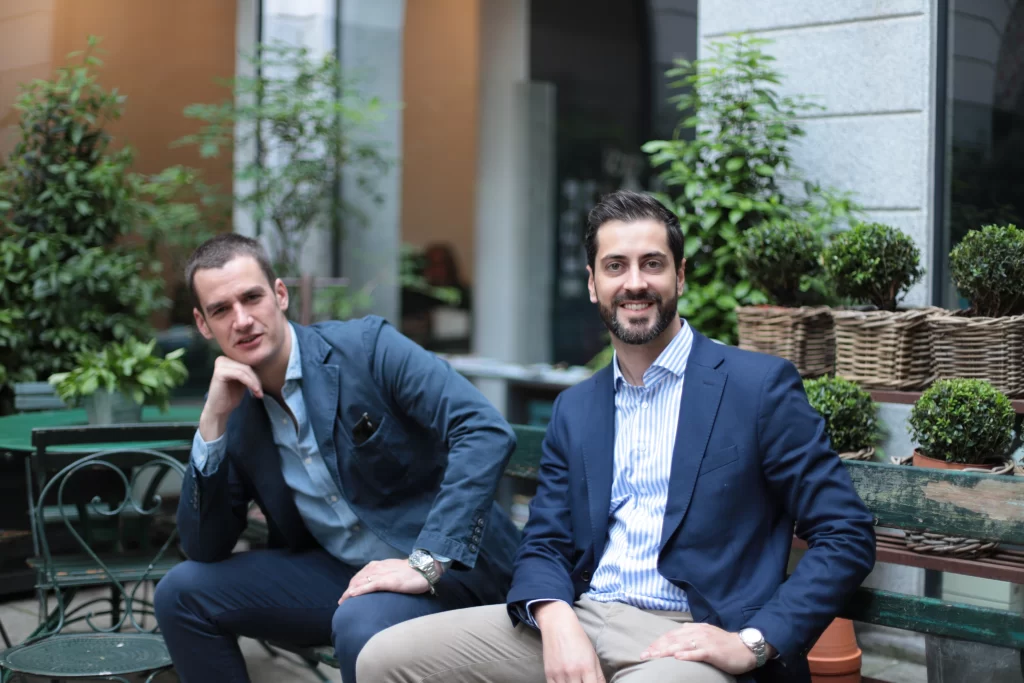
In just a few years, Barberino’s has transformed Italian male grooming, blending tradition with a modern, customer-first approach. Founded by former finance professionals Niccolò Bencini and Michele Callegari, it has grown from a single Milan shop to a global name. With U.S. expansion and a bold vision, Barberino’s is shaping the future of men’s grooming. We sat down with Niccolò Bencini to discuss the journey, challenges, and what lies ahead for Barberino’s.
What inspired you to create Barberino’s, and how did you bring your vision to life?
Coming from a finance background—having studied economics at Bocconi University and worked in strategic consulting—I never expected to enter the grooming industry. My co-founder, Michele, had a similar path in M&A at Crédit Suisse. However, a project in London exposed us to a different approach to men’s grooming—barbershops that weren’t just places for haircuts but real experiences with curated atmospheres and strong brand identities.
When we returned to Italy, we noticed the market was still underdeveloped. Men either went to unisex salons—often not designed for them—or to old-school barbershops that hadn’t changed since the 1970s. There was no premium yet accessible experience tailored to modern men, so we decided to create it ourselves. We studied the sector, recognised the rising interest in male grooming, and saw an opportunity to introduce something new. That’s how Barberino’s was born.
How was the male grooming market when you started, and where does Italy fit in globally?
When we launched Barberino’s, Italy lagged behind countries like the U.K. and the U.S. Despite its deep-rooted barbering tradition, the industry had not evolved to meet modern expectations. The market was highly fragmented, with no strong, recognisable brand leading the way.
With Barberino’s, we set out to bridge this gap by modernising tradition while preserving its authenticity. We have always focused on delivering top-tier service with an Italian touch—combining elegance, craftsmanship, and meticulous attention to detail. We saw an opportunity to create a brand that seamlessly blended heritage with innovation, offering a premium yet accessible grooming experience that resonated with contemporary men.
How did the name Barberino’s come about?
The name comes from a family story. Michele’s great-grandfather, an Italian immigrant in the U.S., worked as a barber for his community in Boston alongside his regular job. They called him “Il Barberino” because he was young, and the nickname stuck. When we found his records on Ellis Island, we knew it was the perfect name—rooted in history yet with a modern ring.
What were the biggest challenges in growing Barberino’s from one shop to a recognised brand?
Initially, finding barbers who wanted to work with us was the most challenging part. Since neither Michele nor I are barbers, professionals in the field were sceptical. They didn’t understand why two finance guys wanted to open a barbershop chain.
To overcome this, we launched a contest for barbers, offering the winner product prizes and a permanent contract. That’s how we hired our first barber. Once we had the first team in place, things started moving.
How do you balance tradition with modern business strategies?
We preserve tradition in our service: our barbers use classic Italian techniques, traditional tools, and high-quality products. However, we innovate through branding, customer experience, and technology. For example, our shops have a carefully designed aesthetic—vintage yet contemporary. Our barbers wear custom uniforms, and every product we sell reflects our philosophy of Italian elegance and craftsmanship.
At the same time, we leverage technology to enhance efficiency. We developed a custom booking and management system to ensure smooth operations across all locations. This system allows customers to book appointments easily while giving us insights to optimise our service. We also built a loyalty program, “BarbaCoins,” where clients earn points through services and purchases. This keeps them engaged while reinforcing our brand identity.
How do you ensure a consistent customer experience across all your locations?
Standardising the customer experience was another challenge. We needed every shop, whether in Milan or New York, to provide the same high-level service. That’s why we built a structured training program, focusing not just on technical skills but also on customer service. Small details—like offering to take a client’s jacket instead of pointing to a hanger—make a massive difference in how our service is perceived.

What role do technology and e-commerce play in your brand strategy?
Technology is essential. Our app isn’t just for booking—it’s a full management platform that integrates customer data, helping us personalise their experience. Clients get a reminder if they haven’t visited in a while. If they’ve had a particular treatment, we suggest related products.
However, we’re selective about online marketing and e-commerce. We do sell on Amazon and our website, but our real strength is in-store sales. Unlike some DTC brands, we don’t believe in excessive spending on digital ads because the online space is oversaturated, and customer acquisition costs are high.
Instead, we focus on creating in-store experiences that drive organic loyalty. Clients who visit our shops for a service are much more likely to fall in love with the brand and buy our products. This is why our retail expansion aligns with our service locations—we want to maintain control over the brand experience.
You recently celebrated the first anniversary of your store in New York. Can you tell us about your strategy for expanding to the US?
Expanding to the U.S. was a major step, and we knew we needed the right partner. That’s when we connected with Eric Malka, founder of The Art of Shaving. Eric built a successful male grooming brand that Procter & Gamble later acquired and scaled across the U.S. His experience was invaluable, giving us insights into the American market.
Eric believed in what we were building and decided to invest in Barberino’s, becoming our partner in the U.S. Thanks to him, we opened our first New York store, which performed incredibly well, reaching break-even in just six months and generating a $1.5 million run rate in net sales.
What are your plans for international distribution?
In Italy and Europe, our strategy is to focus solely on wholesale product distribution, whereas in the United States, we’re taking a different approach. The U.S. market presents a greater willingness to invest in grooming services—a haircut costs around €36 in Italy, while in New York, it’s $85 plus tip.
Our expansion plan in the US includes opening 15 more stores in key U.S. cities establishing Barberino’s as the go-to brand for premium men’s grooming. Beyond that, we aim to scale our product distribution through high-end retailers like Nordstrom and Bloomingdale’s and professional barber shops.
While we explore new opportunities, we’re careful about our approach. Expanding in Europe is more complicated due to regulatory differences and market fragmentation. The U.S., on the other hand, offers a single, large economy where we can grow more efficiently.


